Monday, February 25, 2019

Pinhole camera


What is a pinhole camera?A pinhole camera is a camera without a lens but rather a tiny a pinhole (a light-proof box with a small hole in one side). Light from a scene passes through the aperture and projects an inverted image on the opposite side of the box, which is known as the camera obscura effect.


Early pinhole photography:

The first known descriptions of a pinhole camera are found in the 1856 book The Stereoscope by Scottish inventor David Brewster. One older use of the term "pin-hole" in the context of optics was found in James Ferguson's 1764 book Lectures on select subjects in mechanics, hydrostatics, pneumatics, and optics.


How a pin hole camera works:


A pin hole camera works similarly to a human eye. The small hole in the light proof box, similar to a pupil, lets a small amount of light in. The small amount of light get reflected onto film and the photo is complete.

Uses for pinhole cameras:

The image of a pinhole camera may be projected onto a translucent screen for a real-time viewing (used for safe observation of solar eclipses). But it is more often used without a translucent screen for pinhole photography with photographic film or photographic paper placed on the surface opposite to the pinhole aperture.


duegerotypes

duegerotype

 The daguerreotype image is formed on a highly polished silver surface. Usually the silver is a thin layer on a copper substrate, but other metals such as brass can be used for the substrate and daguerreotypes can also be made on solid silver sheets.

Image result for daguerreotype

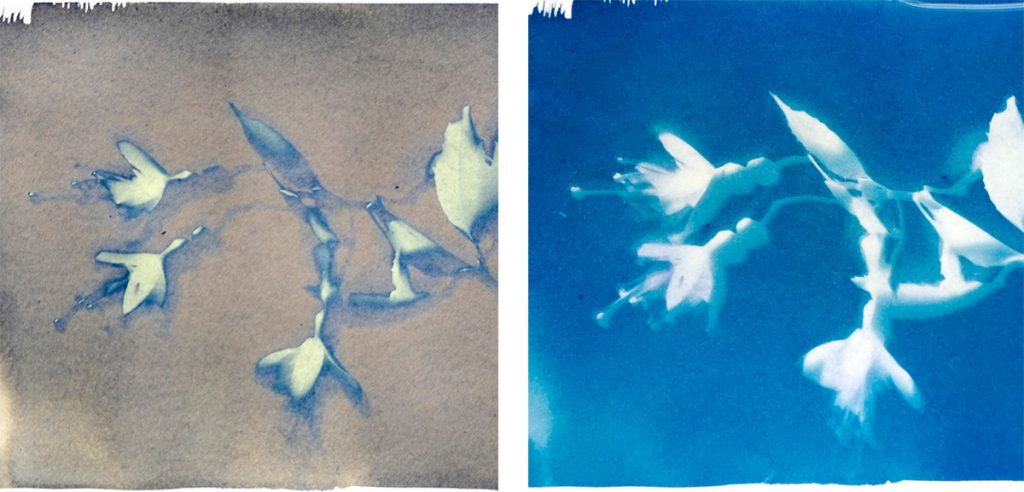
cyanotypes

cyanotype

1. Mix Your Cyanotype Chemistry

These Cyanotype instructions will make up 200ml of working solution, enough to coat roughly 50 A4 sheets.
First off you need to measure 25g of Ferric Ammonium Citrate and add water to bring it up to 100 ml. Next, you measure 10g of Potassium Ferricyanide and mix that with water to make up to 100ml. Make sure both the chemicals are fully dissolved. Finally, under subdued light, mix the two solutions together. You are now ready to coat your paper.

2. Coat Your Paper

The paper should be coated away from sunlight. Tungsten light, as found in most lightbulbs is fine. Use a brush to evenly coat your cyanotype solution. A foam brush will give you a nice even coat. Then, leave the paper to dry in the dark. You should mix the solution as you need it, as it does not keep well. Paper, once you coat it and it is dry, can be kept in the dark until you are ready to use it.

3. Make Your Print

Place a negative or an object onto the prepared paper. A piece of glass over the top will help keep the image sharp. You then leave the paper to expose in sunlight or under a UV lamp. The exposure will time depend on how bright the light is, so you will need to do some testing. The paper will begin to change colour during exposure. The exposed part of the paper will turn a pale bronze colour, this will let you know the print is ready to wash.

3.Wash Your Print

Finally, rinse the paper in water for 2 minutes and you will see the colours reversed. This will also fix your exposed image and make it safe to view in daylight. If you do not have water to hand, place your exposed paper back in a box to wash later.

How To Make Cyanotypes

Image result for how to make a cyanotype

Tuesday, February 12, 2019

Project 7


HDR


In the photos I edited, I made many copies at various contrast levels for each photo. I then layered them in Photoshop. This gives it the feeling that there is more light than there is.


Panoramas


In these photos I edited, I took a vertical and horizontal panorama. I then edited light levels, contrast, exposer, and colors for each.


Multiple exposers


In these photos I edited, I layered the photos then adjusted opacities.

Monday, February 11, 2019

Project 6.5


In this Project we went to the max station at providence park. When taking the photos we tried to
capture the whole landscape around the area and get pictures from different views.We then printed
them out and collaged them on a piece of poster board.